

A Fake Degree Cost Him a Fortune [The Bad Hire Ep. 37]
A CFO lies about having a Stanford MBA. A Walmart executive gets exposed during a promotion review. And a Notre Dame football coach loses one of the biggest jobs in sports after just five days.
Episode Recap
A CFO lies about having a Stanford MBA.
A Walmart executive gets exposed during a promotion review.
And a Notre Dame football coach loses one of the biggest jobs in sports after just five days.
In Episode 37 of The Bad Hire, Ken, Morgan, and Emma react to some of the most shocking résumé fraud stories ever uncovered—and the real-world consequences that followed.
From entry-level hiring mistakes to executive scandals that moved stock prices, this episode proves that the truth always finds a way to surface.
If you hire people—or you’re building your own career—this episode is packed with lessons you won’t forget.
What's Covered in This Episode
- The three-hour secretary disaster
- The Veritas CFO who faked a Stanford MBA
- The Walmart executive caught by a background check
- The Notre Dame coach who exaggerated his credentials
- How verification failures happen at every level
- Why integrity matters more than impressive credentials
Key Takeaways
- Verify before you trust.
- Credentials matter, but honesty matters more.
- Hiring pressure often leads to bad decisions.
- Executive-level mistakes can impact entire organizations.
- The truth has a way of catching up.
Chapters
- 00:50 Ken, Morgan, and Emma kick off the show
- 01:42 $10,000 Bad Hire contest update
- 04:07 The secretary who lasted only three hours
- 06:15 Sponsor: Bchex
- 07:36 CFO exposed for fake Stanford MBA
- 13:39 Walmart executive caught by promotion background check
- 18:02 Notre Dame coach loses job over résumé fraud
- 21:59 Why verification matters in hiring
- 22:46 Contest reminder and wrap-up
Full Transcript
Read the full transcript
This transcript was generated automatically and has not been checked for accuracy.
00:00:00 She came in and immediately couldn't figure out how to log in, use a calculator, or really even type. Use a calculator? Yeah. The fake degree had been sitting on his resume the entire time, and nobody had ever checked it out. When the news broke, the company's stock dropped nearly 20% in a single day. This is The Bad Hire, the show with the best stories about the worst employees. We fired him, of course. People are crazy. It's like an HR nightmare. Right? One bad hire stole all of it. Crazy stuff. She got what she deserved. Oh. I'm your host, Ken Monroe, and every week we dive into real-life stories from the wild world of work
00:00:44 and what can happen when the wrong person gets the job. These stories aren't just crazy. They're cautionary tales about lessons learned the hard way. Let's get started. Hey, everyone, and welcome back to The Bad Hire, the show with the craziest work and hire stories. I'm back today with Morgan and Emma. What's up, guys? Hello. You guys got good stories today? Yeah. Thanks, man. We had a good meeting yesterday about it, so I think you guys are prepped, and we had some good submissions and all that kind of stuff. Yeah. Yeah, we're reading a submitted one today, and we have a segment today, but not on this episode. It's the next one. Okay. All right. Well, you know the drill.
00:01:25 Every week we dive into the wildest, weirdest, most jaw-dropping kind of hiring fails, office blow-ups, OG flame-outs, interviews that blow up, and we do it from organizations all over the country, and it's a lot of fun. So we just tell stories and embrace how tough it is to be out there in the human resources world, in the recruiting and talent acquisition area, how tough it is to find great people. So don't forget, we're running the contest. It's $10,000. You send us your best bad hire story, and if it's the best of the year, someone's going to win $10,000.
00:02:07 We're going to put $10,000 in a briefcase and deliver it to somebody somewhere. We're not going to have a giant check. I feel like a giant check that we can handle. Don't you think the $10,000 in a briefcase would be so much cooler? Yeah, but I mean, I would be a little annoyed with $10,001 bills. Yeah. Well, you could do a thousand $10 bills. I feel like for safety reasons, a check might be. Okay. Well, either way. For safety reasons. Either way. Shopping a check. Like, literally, that sounds like a bad hire story waiting to happen. Somebody walks out with $10,000 of a briefcase, and then they get jumped. They sit it on top of their car and drive it away. And then it flies away. So anyway, we're going to have a way 10,000 doors. So submit your story. Go to thebadhire.com. Get it done.
00:02:48 Take your shot. Method still pending. Yeah. Yeah. And then we also have the opportunity for you to do a guest clip. So if you want to do a guest clip, put it out there. We also do a lot of reach out looking for guests on the show. Maybe you get a reach out from us. If you do respond, say, yeah, I'd be happy to do it. And what happens is one of, um, one of, uh, somebody from our team will give you a call and they'll do a guest, a guest clip segment where they'll interview you on camera and, and, um, ask you to tell your stories and a little bit about yourself and, and tell your bad hire stories. And then we'll run them and react to them here on the show. And, uh, uh, that's, uh, those are always my favorite. Um, we've had some pretty cool, um, guest clips happen and I hope we, you know, I understand
00:03:32 you told me the other day there's, you know, probably 40 people in the pipeline. So that's cool that, that are interested in just for the month of May. So, yeah, that's awesome. All right. So why don't we get started? All right. You guys ready? Yeah. All right. So, uh, this is, uh, uh, a submitted story. It's anonymous. So it won't be saying anybody's name, but, um, it's called the three hour secretary. Uh, when running my family business, I was hiring a front desk worker. It was a client facing position with elderly clients and people in medical crisis. So a resume came in and I gave it a preferential treatment because her name was the same as my
00:04:13 niece. Okay. But also her resume qualified her for the job. I should have done more checks and a better interview, but I was blinded by an intense need to get someone hired. She came in and immediately couldn't figure, couldn't figure out how to log in, use a calculator or really even type. Use a calculator? Yeah. Oh. Or even type at all. After having her answer the phone and then working with her to help her understand she needed to not stress and remain calm. I found her crying and smoking in the back near the oxygen tanks. Oh gosh. That sounds like a bomb. I was just about to say that that sounds like a disaster waiting to happen.
00:04:55 That's not good. I took her into the conference room and asked her, Hey, can you handle this job? Because it seems like you can't. She blurted out that she absolutely couldn't and ran out and never came back. Oh my gosh. Was this like... I think she got the name. It was crazy. I think she got the job because her name matched the niece and he's like, somehow was like, Oh, well, I love my niece. I'll love this person. Oh gosh. Yeah. It's just, it somehow is going to translate. Did they say if it was like a young person or like, I'm assuming maybe no, if they couldn't type or you like, but then not use a calculator?
00:05:40 Yeah. I don't know. I'm kind of crazy. I don't know how to use a calculator. Maybe it was just from like the stress of it all. Yeah. Just too much. Yeah. Yeah. That's kind of sad. I guess it's understandable. You know, you're like, you're trying to make it inside. That's kind of sad. It's sad. Yeah. It's a sad hire. Yeah. I don't know. You feel bad. I would feel terrible for someone who was crying on the first day. Yeah. That, you know, but it does, they readily admit early that, well, I should have done some more checks and I should have interviewed them better. But yeah, I looked at her name and said, you're hired. Yeah. That is pretty crazy. I'll take it. Before we dive back into the chaos on the bad hire, this episode is brought to you by
00:06:23 B-Checks. Hiring shouldn't feel like rolling the dice. Background checks should come with great tech, seamless integration, and customer service that delivers. That's B-Checks. Lightning fast results, unmatched accuracy, built in fraud prevention. We help you hire the right people. Now, B-Checks plugs into over 100 HRIS and ATS systems. So your background checks run smooth, fast, and backed by top level service. Protect your team. Protect your reputation. Protect your sanity. Go to B-Checks.io. That's B-C-H-E-X dot I-O. Awesome. So if someone applies here called Morgan, I'll be like, oh, Morgans.
00:07:09 Morgans are awesome. Come on in. I love Morgans. As a Morgan, I can attest not all Morgans are amazing. I'm just kidding. But no, that's crazy. So I got another one here. So in 2002, all right, the CFO of a major Silicon Valley software company called Veritas is forced to resign after it comes out that he had been claiming a Stanford MBA on his resume for years. He did not have an MBA from Stanford. An anonymous tip from outside the company brought it to light. Oh. I always wonder about these anonymous tips. Yeah. Like it's got to be somebody who knows. It's got to be somebody who was plotting against him, you know?
00:07:50 Or somebody who knows. Yeah. Like somebody who knows his real backstory and is like, you know, he's pissed off enough or whatever. It's kind of like the one that we read a couple of weeks ago about the lady from MIT. Yeah. Like nobody turned her in until 28 years later. It's like, well, this was this person just sitting on this information for 30 years. Finally get sick of her. Yeah. Or they wait till they get to a certain level. I feel like even like you see that with football players, like they get to the NFL finally and then a story comes out about them. Yeah. Like. It always gets me how that happens. Yeah. But whether it's that or famous people or politics or whatever, it's like there's always
00:08:32 after they've achieved, then someone comes out from 20 years later and he's like, you helped this? Yeah. You helped this for 20 years? Yeah. His name was Kenneth Launchar, L-O-N-C-H-A-R. Oh. He had been CFO since 1997. So for five years. Overseeing the financials of one of the biggest storage software companies in the industry. The fake degree had been sitting on his resume the entire time and nobody had ever checked it out. When the news broke, the company's stock dropped nearly 20% in a single day. Wow. Wow. Analysts immediately started questioning whether the financials could be trusted because of
00:09:12 that. Merrill Lynch downgraded the stock. The CEO had to get on an emergency conference call to tell investors that the lie was isolated to his educational credentials and had no bearing on the company's books. That sucks. Launcher released a statement saying he regretted the misstatement and that this is what gets me. Oh God. Right? When people make these, come out and make these statements, they're like, I regret my misstatement. That's a one, two, three, four, four. 12 letter word for a three letter word.
00:09:54 They're going to replace a three letter. I lied. I regret my lie and go, I made a misstatement. It's not a misstatement. Yeah. A misstatement suggests like I did that. I was totally by accident that I typed that onto my resume, saved it and printed it and sent it to you. Yeah. And interviewed with that resume. Fancy way to say I lied. Right. I can't stand it when, you know, people do that. Yeah. You know, oh my gosh. I regret the misstatement and that his resignation was in the best interest of the company. Yeah. Right. You think? Yeah, for real. Now here's the part that makes the story. The company's name.
00:10:37 I'm going to take this for granted. Veritas. Somebody verify this for me, but is Latin for truth. It is. Oh my gosh. Yeah. It is. Oh my God. Oh geez. Their CFO had been lying on his resume for five years. I got to believe it was longer than five years. My bet is this followed him like the whole way. I can't believe he threw that on his resume to try to get the Veritas CFO job. Probably, you know. The CFO had been lying on his resume for five years at a company literally called Truth. I feel like that also poses a bigger question is if he was doing his job good for five years
00:11:20 and his Ivy League degree didn't matter. Yeah. I guess that also poses a question of how important was that Ivy League degree if it didn't make him incapable of this trip? Oh my God. You're going to start an entire debate online. We don't have to get into that today. It is going to be some Ivy League degree. It's a conversation for another time. The Northeastern are like, that is not Ivy League. No. But prestigious school. I got a 4.0 in college. I'm all for getting good grades, doing the right thing, being truthful. But that also makes me be like, he was doing his job good and nothing was wrong. Yeah. He just lied, which obviously don't lie. Yeah. He was good at his job. That came up. But I did think it was super interesting, the financial impact to the business that, you know, and of course it probably quickly recovered.
00:12:02 It wasn't, you know, it wasn't a long-term loss of company value, but, you know, an immediate hit to shareholders. And there are people that that does affect. Yeah. There are people that are holding different types of options positions that it does, you know, it shoots through some point and causes something to happen in their portfolio that could trigger losses regardless. So, yeah, that's terrible. You know, we see so many, so much of this. We tell these stories all the time and it's like at the most senior level and it's like a, it's like a lie they told early and it just, it just follows it. And it's like, it's gotta be this whole time, right?
00:12:44 As they continue to grow their career, they, you know, they told this lie to get in. You see this on Reddit all the time. People are like, lie, lie, just lie on your resume. You're like, well, this is, this is the end result, right? Some success comes your way and you have to keep perpetuating the lie. Yeah. And then eventually it catches you, right? Yeah. Eventually someone looks and you're like, well, I was, you know, I was young. I light up my resume. Yeah. It wasn't a big deal. Well, you lied, you went to Stanford. Yeah. You know. It's not like you were like, I went to Catawba Community College. You know, went to Stanford. We love you, Catawba. Yeah, for sure. That was no slight at Catawba. I'm just saying like, there's a big difference from like a community school to Stanford.
00:13:26 Like, I mean, especially cause I mean, he obviously didn't get an education verification check on that probably. So. All right. So Morgan, I think you got. My story is like dead on same thing, pretty much. So my story is, so David Tover is Walmart's vice president of corporate communications. He's been there for eight years. He's a face of the company to the press. And by all accounts, he's doing a good job. In 2014, Walmart decides that they want to promote him to senior vice president. And as part of that promotion process, they put him through a more comprehensive assessment, which included leadership evaluation, drug testing, all the works. And somewhere in that process, a third party background check that flags his education. David Tover had been listing himself as a 1996 graduate of the University of Delaware for nearly two decades.
00:14:12 The University of Delaware confirmed that he had attended, studied art, walked at graduation and capping down with his family watching and left campus, but only was a few credits short of actually receiving his diploma. And there was no degree on file. So he graduated technically, but didn't. He did the pomp and circumstance of graduation. Yes, exactly. But didn't finish the details. Exactly. So when Walmart confronted him about it, he was up front. He explained that after four years of Delaware, he had moved to New York, landed a job, and a few months later, he had found out that there had been some kind of mix up with his credits. He just had never went back to finish. And he said, I got a job and never looked back. He said, I didn't really think that an art degree would matter in communications, which was the field I went into.
00:14:56 Walmart told him that they couldn't promote him based on what they found. And he said that the promotion was the only job he wanted. So they agreed that he would leave. Eight years at the world's largest retailer and a career built entirely in the field, he said the degree didn't even apply to. And it was the promotion, the background check that nobody runs until you're already on your way up, that finally got it. Wow. So, I mean, that's kind of dirty, though, because I feel like it's like, or credits. I would have just been like, hey, go back and finish it. And then come back and get your promotion. I would have to dig into a story, right? Well, the college even verified that he walked at graduation, that he was only a few credits short. And so, like, I would like... Well, he told the story. Here's the way he told the story. He told the story, like, I thought I was good and I left.
00:15:38 And then they called me back later and said, oh, you're four credit short. Yeah. And I'm like, is that really the truth? Is that what happened? Or do they say, hey, I've never known a college to say, well, you can walk in May if you take the summer course and get knocked out. So, I know a bunch of people who do that. Really? I actually know a bunch of people who just did that recently. So, I don't think it's irregular. So, you can't do that. You can do that. It's an option. So, you can convince the school to let you walk in May. Because the next time you're not going to be able to walk is until December. So, like, a lot of people, they want to walk in May. Well, they often got a job. Yeah. So, you should. You hope you have a job. Yeah, exactly. So, I think, like, that is a real thing. But I feel like the mix-up of credits would be something that I find hard to believe. Like, most of the people who know that they're going to walk and they have the graduation, I feel like they know...
00:16:20 Yeah, it's like an agreement between you and the school. I didn't know if they would do that. Yeah. But if they do that... They just won't print your degree when you walk. And this is kind of suspect. I'm like, yeah, yeah. And then you're like, oh, I got my job, and I'm going back. When you walk, they just hand you an empty degree. Yeah. So, like, I mean, like, he had to know. Like, he definitely got no degree that day. It was definitely an empty degree. They didn't print it out for him. So, it could have been an empty degree. We're just saying, we don't know, but... Exactly. Yeah. That's just my... Like, from my experience of graduating, like, that's... I kind of fall on, like, two sides here. Because it's like... Yeah. If it was technically an error, and he's right, I would like... I feel bad, bro. Part of me feels like... Walmart needed to... I feel bad. Yeah. Sometimes you've got to listen to the circumstance. Even if it was in criminal charges, you've got to listen to the circumstance and get some context and figure out what happened.
00:17:02 Clearly, this guy was doing a good job. He's going to get voted as senior vice president. It wasn't about the quality of his work. And then you get this issue, and you go, was it purposeful? Did he do it on purpose? I feel like if you're the face of the company, and Walmart knows you're the face of the company, and you've been so much in the press, I feel like the right thing to do would have been like, hey, let's go have you finish up that degree. Go take your four credits, whatever it is. And then you come back, and you take that leadership role. Instead of, like, I don't want to, like... You know what I mean? Like, if that was really that important to Walmart, that he go and finish that. Or, you know, I don't know. Yeah. But... I think it's tricky. I'd be curious what HR people had to say about it. Yeah. It's kind of an interesting story. Yeah. Wow. What a big one.
00:17:44 And, like, derailed... Yeah. You know, derailed a... Derailed his career. I hope he went right back and finished it up. Yeah. You know? Or got a nice job after that with somebody who didn't really care about that. You know? It would lean on his Walmart experience. So the degree. The art degree. Mm-hmm. You know? Yeah. All right, Emma. What do you got? My story's also similar to these. We're just full of resume fraud stories. Oh, my goodness. Crushing the resume fraud. Yeah. So in 2001, Notre Dame hired George O'Leary as their head football coach. This is one of the most coveted coaching jobs in the entire sport, and they had just found their guy. He lasted five days.
00:18:26 It came out almost immediately after the announcement that O'Leary's resume had some significant problems. He had claimed a master's degree from New York University. He didn't have one. He had also claimed to have earned three varsity letters playing football at the University of New Hampshire. He had never played a single game there. Notre Dame gave him the opportunity to resign, which he did, issuing a public apology for what he called inaccuracies in his biography. Yikes. Another long word for life. He said he was embarrassed and sorry for what he had brought upon the university, its alumni, and its fans. Oof. The wild part of this story is that O'Leary was genuinely a good football coach. He had built a strong record at Georgia Tech before Notre Dame came calling.
00:19:09 Nobody was questioning his ability to do the job, just the story he had been telling about himself for years to get there. He eventually landed as head coach at the University of Central Florida, where he coached for over a decade. So the career survived. But the Notre Dame job was gone in five days over credentials he never even needed to lie about in the first place. Of course, at Notre Dame, a school that is more prestigious they're going to be like than Central Florida, obviously, they're going to be like, no, you lied about your degree. But I mean, the thing that if I was hiring a football coach, this is just me personally, I would care more about him not starting. Well, it's the controversy of getting caught, right? Then the media's on you, and then it's just this pressure cooker of everything, right? In that situation.
00:19:50 And they almost have to listen. Everyone in the whole building's calling you a liar. The media's calling you a liar. No character. And then he comes out, owns it. I screwed up. It was inaccurate. It's a heck of a lot better than misstatement. Yeah. Everybody says it was inaccurate. It's inaccurate. I put something inaccurate on my resume. That is close to saying I lied. Yeah. I mean, it's still not the truth. Yeah. But then, of course, you're going to have people that are like, oh, he's just apologizing because he got caught, blah, blah, blah, blah. Like, you know, everybody's going to have something to say about it. It looks like UCF goes, hey, we're going to take him on his record.
00:20:33 And now that that's in the open, can you imagine just going to bed every night? Just, you know, maybe it's, you know, it's constantly on your heels. You know, it's like this weight over your head that, you know, maybe you forget about it. Maybe you tell it and you forget about it. But I mean, you, you know, you've been telling the story that you played college football. You've been telling the story that you graduated, you had a degree and you're really a high school graduate that never played any football. Yeah. And I mean, deep inside, you've got to feel like a fraud. Yeah. I couldn't live with myself. I would feel safe all the time. Yeah. I couldn't do it. I got to believe that. Yeah. I'm a horrible liar. So I couldn't like, could not get away with this. That's good to know.
00:21:14 Yeah. I'm a really bad liar. And my nostrils flare like really bad. So like anybody knows I'm like. That's good. That's a really good to know. No, Storm like knows exactly what I'm lying. Cause my nose just goes. Yeah. So the other day when you, when you said you were working remote, were you actually working? I promise I was working remote on a Friday. That was the half day. You want to stare at me? Just chucking the nose. I never work remote. Keep in mind. The one half day a week that I work remote. All right. Hey, well, listen, that's it. That was awesome. Good, good resume fraud stories that like really significant ones. Things are all could have been caught by.
00:21:55 Moral of the story. Do not lie on your resume. It will catch up to you. Like, what's the point? Yeah. When you're hiring these roles. Yep. You know, you gotta, um, sometimes it's these roles that, that move up and like remove HR out of them. Yeah. And they break the process. You know, HR has built a process. They got it figured out. They know how to do it. They're vetting. They're running their system. And, and, you know, some executive, some, you know, athletic director, some, you know, reaches down and pulls somebody up out of the process says, Hey, we're going to hire this guy. We're going to move this guy. And then you find out. And that's, and, and they break the process and, and, um, and that, and that's how it happens.
00:22:35 So, you know, kudos to good HR teams. Uh, you know, you gotta stay, you gotta keep that, keep them involved. I think. Yeah. Well, appreciate it. Hey, that's it for us today. Um, thanks for listening to the bad hire. We're going to do another episode here in just a minute on the live stream. That'll be posted, um, the following week. But, uh, listen, uh, subscribe to the channel, rate, review it, comment on it, comment, you know, if you don't like what we're saying, if you like what we're saying, if you agree, if you know someone who did the same thing, put it in the comments. Uh, we'd love to see your engagement. We'll, we'll reach it. You know, if you comment, uh, there's a good chance we'll talk back to you, right, Emma? I will. Yeah. You will. I will. Just don't say anything sassy to Emma because she'll sassy.
00:23:17 She might be a little, she might be a little professionally snarky. So. I'm really good at it. And don't forget about our, our, our, uh, contest for $10,000. We really, really would like to give away $10,000 to the best story. I think we're going to have a lot of fun with it. Um, and so do it, submit it on the bad hire.com and, um, maybe your story will be featured. You can even, uh, come on the show as a guest, uh, in a guest clip. We'd love to have you do that as well. Um, absolutely. I think it's fun to sit around, tell your story. Then you get to see yourself on the show. We'll clip it up and put you on social media. Uh, it'll be good stuff. That'd be good. So thanks for listening and we'll see you next time. Bye.
00:24:09
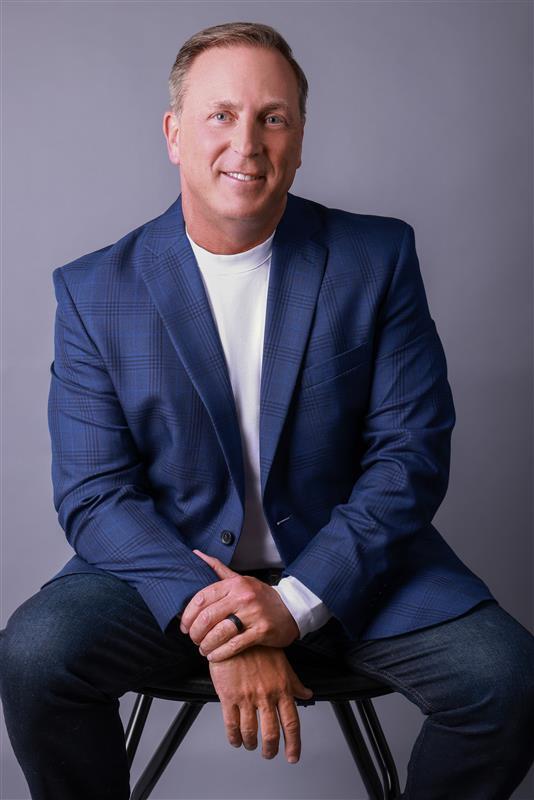
Ken is CEO of Bchex, where he leads a platform spanning background checks, continuous monitoring, visitor management and volunteer screening. He created the Screening Hero Masterclass, a free SHRM-certified course on building FCRA-compliant screening programs. After a career spent in screening, what still gets his attention is what good hiring builds: safer workplaces and stronger teams.
Recent Episodes
Federal Agents Arrested the New CFO on His First Day
He came in early. He got his badge photo taken. He sat down with the quarterly numbers like he'd been there for years.
Watch Now →
She Showed Up to Work in the Wrong City
She walked into the office on her first day. The receptionist had no idea who she was. It took 18 minutes for anyone to figure out what was wrong:
Watch Now →
Fired on Day One for Going Home on Time
She worked nine and a half hours on her first day. She got paid $28 for it. Then, at 7:30 that night, her phone rang.
Watch Now →