

One Tweet Ended Her Career Overnight [The Bad Hire Ep. 31]
A PR executive tweets something offensive before boarding an 11-hour flight… and gets fired before she lands. A Teen Vogue editor loses her dream job before publishing a single article.
Episode Recap
A PR executive tweets something offensive before boarding an 11-hour flight… and gets fired before she lands.
A Teen Vogue editor loses her dream job before publishing a single article.
And an Outback Steakhouse employee gets fired after venting on Facebook about a church not tipping.
In Episode 31 of The Bad Hire, Ken, Randall Wilson, and Jamie Franco break down some of the biggest social media hiring disasters ever — and why companies are paying way more attention to online behavior than ever before.
This episode dives into:
If you’ve ever posted online thinking “nobody will see this,” this episode might change your mind.
Key Takeaways
- Social media screening is becoming essential hiring protection
- Old posts can resurface at the worst possible moment
- One viral mistake can destroy years of work
- Online behavior impacts company culture and brand trust
- Public content is public forever
Chapters
- 00:00 Cold open: fired before the plane landed
- 00:45 Ken introduces Randall Wilson and Jamie Franco
- 02:04 $10,000 story submission contest
- 03:28 The infamous shirtless Zoom call story
- 06:20 Why companies are focusing on social media screening
- 08:39 PR executive fired after tweet goes viral mid-flight
- 12:42 Why old posts still destroy careers today
- 18:57 Teen Vogue editor resigns over resurfaced tweets
- 20:43 The danger of partial disclosure in hiring
- 22:53 Influencers, brand risk, and social media checks
- 27:00 Outback Steakhouse server fired over Facebook post
- 31:50 Why every company needs a social media policy
- 35:18 Final thoughts on social media disasters and hiring
Full Transcript
Read the full transcript
This transcript was generated automatically and has not been checked for accuracy.
00:00:00 She landed 11 hours later and she was fired. A post from three or four years ago that was public. Makes a difference. It's going to make a big difference in your next 10 to 15 years and what your dream job is. So, knowing about the problem and understanding the full scope of the problem are two very different things. This is The Bad Hire, the show with the best stories about the worst employees. We fired him, of course. People are crazy. It's like an HR nightmare. Right? One bad hire stole all of it. Crazy stuff. She got what she deserved. Oh. I'm your host, Ken Monroe, and every week we dive into real-life stories from the wild world of work
00:00:41 and what can happen when the wrong person gets the job. These stories aren't just crazy. They're cautionary tales about lessons learned the hard way. Let's get started. Hey, everyone. Welcome back to The Bad Hire. The show with the best stories about the worst employees happens. We have maybe 28 shows under our belt and we have heard some really crazy stories. I've got two special guests today with me today. I'm joined by Randall Wilson. He's the chief operating officer over at BeachX. Glad to be here. Yeah, man. Thank you. Yeah, it's cool. And Jamie Frankos, she's a vice president of Global Partnerships and Alliance at Fairly.
00:01:25 I think you were just in Europe or something, weren't you? I was in Paris. Oh, okay. But I'm getting ready to go to Amsterdam. I saw something. But she's Global Partnerships and Alliance at Fairly. Thanks for having me. Looking forward to having some fun. Yeah, for sure. All right. Let's get into it. Well, you guys know the drill. You know, we'd love to get your stories. We'd love for you to submit them in. We want you to do that. It could be a good, it could be a bad story, a bad interview story, a bad hire story, like OG flame out, a first day blow up, whatever it is. And then if you've got a good hire story, you know, we love that too, because I love the redemption stories. So, you know, you can send that in. Now, what we'll do is at the end of the year, you know, we're going to give, we're going
00:02:09 to pick one story as the best story of the year, and we're going to award that person $10,000 for the best story of the year. So go ahead, take your shot. Send us a story. You can either send us a story that's written, or you can ask to be, do a segment on the show where you'll meet with a producer. They'll interview a segment with you where you can tell the story yourself. Those are always super fun. Um, and then, uh, you know, we encourage you to kind of get in line. I think we have 80 people in the pipeline trying to, trying to get on the show like that. So, um, and we're getting to them as fast as we can. So, uh, but yeah, you know, sign up for it. All right. Or we're, we must be one of the fortunate few that got that in front of the line of 80 other
00:02:53 people. So, oh, um, no, there's not, they're not hosts. So we don't, you know, it's what we found is so much easier to coordinate these segments than to try to get people to time everything perfectly. And then, you know, what, uh, cross-talking reaction stuff doesn't work as well when it's, uh, there's somebody on, you know, over the phone or, you know, on zoom call or whatever. Or, you know, it's not, it's hard for them to get. Who's the ultimate judge of the story? Who gets to pick the best? I think the team will pick. Okay. Yeah, for sure. So, um, I have one particularly I like so far. So we got to top it, right?
00:03:33 It's the, uh, the, the, it's a cat story. So it's, it's, well, a guy that gets on zoom calls and team calls and he's laying in bed shirtless with his cat and he's on the company call. It's a great story. And it just resonated with me. I think because we, we, we had an occurrence of that. Had somebody on a, yeah. I was in bed shirtless. Yes. Wow. Just wow. Yeah. We'll try to top this today. We watched this, you know, when you came out of, uh, when you came, when COVID first started
00:04:13 and we started moving everybody around and got, and got them home. Um, I think we sent everybody home on March 17th or March 19th. And, uh, uh, I just, I just, I just remember, um, you know, that everybody was so like everything was, you know, dress, they still wore their gear. You know, they were so dressed up, hair done, makeup on, you know, everybody looked sharp that first six months. And then it all went downhill. You know, then it was like, well, the hair no longer now. Or they just go off camera. Yeah. Yeah. Well, they accidentally turned their camera on and they're, they're bare chested and laying in the bed. Yeah. And so it goes all the way to the end.
00:04:55 And, um, I don't know. I think it's funny. And, you know, you just see the slow decline of like, okay, when that, you know, they don't dress up anymore. Now they don't, they don't really wash their hair or do their hair anymore. And, you know, the makeup's long gone. And so the, the end result is they're turning the camera off. Right. So now you're, you're doing an event with no one's on it. And I'm like, as a leader, I'm trying to like, how do you, how am I going to build and shape a culture of people who won't put their face, you know, you don't even know what people looks like. If we hire somebody, no one's even going to know what they look like. Cause if they come on and see that everyone turned the camera off, they're just like right back off. There's your opportunities to make some bad hires right there. Yeah. Um, on camera only.
00:05:35 Yeah. So, so we make, I think we have a rule, don't we do? Always had a camera. James has a rule. Yeah. Yeah. Camera's got to be on. I'm a camera on girl too. Yeah. So you have to, you have to see him. Yeah. I don't. Even on client calls or prospect calls, we'll come on with cameras and sometimes the other hand feels a little obligated to turn their cameras on at that point. You're like, well, everybody there just turned their camera on. So let's flip our camera on. It's kind of a way to make sure they're paying attention, right? Then I just like dozed off and. Well, you feel like you're talking to a wall. If not, you're like, well, just talking to the space. Yeah. Oh man. All right. So today is pretty cool because, um, you know, Jamie does, uh, is heavy into social media
00:06:17 screening and her company is heavy into social media screening. It got great technology. And, um, and so that does that. And, and she's just, uh, you've been in it for. For a while now. For, yeah. Since the beginning. Yeah. You know, of, of, of really when this became a thing, I think. Um, I, I remember, um, when it first started that, you know, it was, it was just a lot of resistance in the industry around like, is this, is this legal? And of course, every lawyer for every CRA for, oh, you can't be doing that stuff. No, no, no, no, no. Our lawyer had a fit. Yeah, he did. Do not put any scoring on there. Do not let them do this.
00:06:57 Best thing you do is just not do this. Just don't do this. Just don't, you know. Are we going to review every one of these before they let them send them out to the clients? Like, well, it's a social media screen. So. Dude, it's public information. It's public posts. They just laid it out there. Like, it's like I went to a speech and heard them talk and I heard them talk. You know, that's what. How else are we going to see people without their shirts on? I mean, come on. That's true. Anyway, so, uh, you, you've been, you've been in that a long time. And so today we're going to dedicate the show, uh, to nothing but social media blow up stories. And so we've got, uh, you know, there's a couple of famous ones we're, we're going to talk about that. I actually did a post about one of these, uh, the other day where I talked about it, but,
00:07:41 um, we'll talk about it here on the, on this show. And these, these should be, uh, these should be interesting. So before we dive back into the chaos on the bad hire, this episode is brought to you by B-Checks. Hiring shouldn't feel like rolling the dice. Background checks should come with great tech, seamless integration, and customer service that delivers. That's B-Checks. Lightning fast results, unmatched accuracy, built in fraud prevention. We help you hire the right people. Now B-Checks plugs into over 100 HRIS and ATS systems. So your background checks run smooth, fast, and backed by top level service. Protect your team.
00:08:22 Protect your reputation. Protect your sanity. Go to B-Checks.io. That's B-C-H-E-X.io. Why don't I get started? Um, uh, in 2013, all right, I guess social media was rolling in 2013. Yeah. And it's prom. Yeah. So in 2013, the head of PR for one of the biggest media companies in the world boarded a flight with 170 Twitter followers. That's all she had, 170 Twitter followers, which is kind of crazy because she's the head, the
00:09:06 head of PR at a huge media firm. Yeah. Yeah. Yeah. Um, you know, she, uh, she landed 11 hours later and she was fired. So she had already been terminated by the time she landed. So her name was, uh, Justin Sacco and she's the senior director of corporate communications at a company called IAC. Um, and that's the company behind, um, match.com and Vimeo and the Daily Beast. So her entire job, her entire job was like managing the company's reputation. All right. And so before she posted, before she boarded, she posted a tweet. It was offensive.
00:09:48 Uh, it was racist and it begins, uh, and it had been sitting in her public feed like for years. So I guess she reposted it anyway. She got on, uh, on an 11 hour flight and there was at the time, no internet access. So, you know, used to be when you flew, there was no wifi. So you were just kind of down, you know, uh, unless you use that little phone in the back of the seat. So, you know, she's flying, uh, an 11 hour flight, no internet access and had absolutely no idea what was happening while she was in the air. Right. So within two hours of her making that post, her tweet was the number one trending topic
00:10:34 on Twitter worldwide. That just gets me. Can you imagine? And she's just sitting, you just say, you're like firing something off or you're sitting in the tarmac, you know, you wait and you bing. She must have had a famous follower. At least one. It's retweeted her or made a comment. Right. Yeah. That crushed her. I mean, she's had to have. I don't know. And so if she becomes the number one trending topic, celebrities were, celebrities were piling on and a hashtag called has Justin, Justine landed yet. Hashtag has Justine landed yet.
00:11:16 Started viral. So in her post, in her post, she, did she tell him she was getting ready to get on a plane and thought she would reshare an old tweet? I don't know. I don't know. I'm. But she had an hour. I read the past. I read the, I actually read the post a couple of weeks ago, but I can't remember the details other than I know, I know it was not a good one. And so. So you're not going to share what she posted. I don't, I don't want to say it because I want to be exactly right. Uh, which he doesn't want to get her hashtag has Justin, has Justine landed yet is trending globally. And IAC had an issue, had to issue a crisis statement. So the company she hasn't even started work for yet, they've hired her, but she hadn't
00:12:00 showed up for her first day. It was trend, uh, uh, uh, had to issue a crisis statement explaining that their own head of communication was unreachable on an airplane. Someone physically went to the Cape town airport just to document the moment she landed. This is crazy. She was fired before the day was over. IAC condemned the tweet publicly, repeatedly in front of the entire internet. The head of communications became their biggest communications crisis. And the thing that still, you know, gets me is this, this was all in her public feed, not to her friends, not hidden, not private.
00:12:43 It's, that's a crazy thing about these social media. Jamie, would a social media screen pick this up? If it was public. Yep. Yeah. There you go. Yeah. So for years, a basic social media screen before she was ever hired would have found out this in minutes. Right. So think about all the social media posts you had doing as a team, as a, as a young college student, getting ready to start your career and not realizing that a post from three or four years ago is good. That was a public. Totally. It's going to make a big difference in your, in your next 10 to 15 years and what your dream job is. 50%, 50% of HR leaders and hiring managers admit to not hiring someone based, based on
00:13:28 something they saw on their social media. We have clients. Think about that. Yeah. We have clients that do social media screening, but a lot of them think that they're detectives as well. And they'll go out and start looking on different popular social media websites, but nothing that a deep dive on a social media screen will of course do because you just don't know. Yeah. That's when you do it that way too, that's hard not to have your own bias. You have to. So you just have to take that off the table. Yeah. I think that's one of the cool things about the social media screens is it's just the company sets policies, says this type, let's bring it in. And you don't have, you don't have a rogue person has certain political beliefs, look
00:14:12 at something and go, Oh, I don't like that person. Yeah. They don't believe the same thing I do. So out. And so that runs prolific through, uh, you know, uh, an entire. For long, the entire organization is thinking like you do. Yeah. Which is not always good. No, that's right. So, um, you know, have you, have you, I guess I'm, um, blown away by how I don't remember back in 2013 stuff happening. That is certainly happens today. Like, I think there are people wrecked and ruined off social media than way more than
00:14:52 their political climate and everything else is so much more. You know, adversary today that, that people used to be what it used to be. So 2013, is that not, uh, about the time that, that my space was dying and Facebook was, was taking off and sort of handing over the reins and, um, Twitter probably was still in its infinite stages. And, you know, um, I mean, the reality is, is people are more educated today on what to post and what not to post. But back then you didn't know. Yeah. You didn't think of, Oh, I'm going to be online for the rest of my life. You don't think like that. Yeah. There's, there's so many instances today where people, um, like it's brought up when they're
00:15:37 28 years old, something they put on social media when they were 16. And I'm like, bro, thank God I didn't live back then. Cause I was so wild and would have, I mean, I'm glad I didn't have social media in college high school. I'm glad I didn't have a cell phone either. Cell phone, cameras, everything in your pocket. Right. So far deep in their feed. They haven't been back that deep in years. You're almost better off. Somebody, you know, a little bit of success. You have a little, you make one person mad at work. You know, you, you create one enemy, uh, in your life. And so they go down their deep dive, you know, and they're like, they're going to go and then they're going to expose something. And then they dig deeper and deeper and more people start digging.
00:16:20 You're just like, you know. Wow. Even if you're not, even if you're not public and you've befriended someone at work in your inner circle who now has a vendetta against you. That's not good either. Yeah. Who's going to take your tweet, take a picture of it, share it. You know, can't believe Ken said this five years ago. Look what he said, but it's not public. But now they've exposed you. Yeah. Because you thought they were a friend. Yeah. So, I mean, even today when we do these and, and I do social media clips, I'm like, I've always got this kind of back filter on like, should I post that?
00:17:01 Yeah. There's been a couple of times where we posted something and, uh, there was one time where we talked about a bad hire who, who went to work early on his first day at work and cut his thumb off before the, before his boss even got there. Oh, wow. And so, you know, you know, you can find yourself making a lot of fun of that and it is kind of comical, but it's tragic too. It's tragic. Right. And it like, the guy found him by following the blood down the road, the guy bicycled like 10 miles to the, to the hospital. So, and so I, you know, in the spirit of just kind of having fun, you know, is you just kind of, Oh yeah, it's fun. You know, you, can you believe that you're walking around? And, and when I, but when I watched it, when we posted it, I was like, Oh, that doesn't,
00:17:47 it just doesn't, it doesn't feel good. You know, it's like, I don't feel good. It's feels like I make it. Same story that was intended. Yeah. Right. It just didn't come across, you know, the way we responded was in good, good fun. So I thought about like, if this guy watched that, he would, he would see us and anybody think we were making fun of him. So this story is from 2013, right? Yeah. So for 13 years, this, this individual has had to live with this nightmare. And it's still following her. Yes. We're talking about it publicly today. Yeah. 13 years later. Well, because she was in the news and this is a big story. So I felt totally good with talking about it. Well, I have one more question. Where's she at today? I don't know.
00:18:28 I didn't look it up, but it's a good question. I'd be curious to. KJ, you want to look at that? You want to look that up? Let us know. Where are they now? She has a better, bad hire story now. Right. She's improved her skills. Yeah. All right. Jamie, what do you got? All right. You got one for us? Yeah, sure. All right. Here's mine. In March, 2021, the publisher behind Vogue, Vanity Fair, and The New Yorker announced they'd hired Alexi McCannan as editor-in-chief of Teen Vogue. She was 27, award-winning journalist, a rising star, and by every measure, the perfect hire. She had also posted racist tweets back in 2011.
00:19:09 So we're back in that era, right? 10 years earlier. She disclosed them during the interview. The publisher's own HR department confirmed this publicly. They knew and they moved forward anyway. The announcement went out March 5th. Screenshots. You just mentioned screenshots. Yeah. Screenshots of her old tweets went viral almost immediately. She had an enemy. Somebody didn't get the job. That friend she made mad. 20 members of her own staff, people she hadn't even met yet, publicly condemned the hire. Ulta Beauty paused a seven-figure ad buy. Burt's Bees suspended their campaign. Oh my God. On March 18th, 13 days after the announcement, Alexi resigned. Before she started. Before she published a single article.
00:19:50 Before she even sat in the editor's chair. And this is what gets me the most. The publisher knew about the post Alexi told them about. But what they didn't find were the homophobic slurs. The Halloween photo. The full pattern. She disclosed what she chose to disclose. And they took her word for it. So. Knowing about the problem and understanding the full scope of the problem are two very different things. Yeah. That's for real. What do we think of that one? I don't know. I think it's interesting. It's kind of like when someone comes to work and they go, hey. You know. They always, hey, anything in your background? Yes, minor. But it's also like when you're on the spot like that, you sometimes are like, I don't know.
00:20:30 Like, I think I'm okay. But then you're like, I don't know. Because you're like wondering. What are you looking at? If they're going to find it or not. Like, is it so old they won't find it? Or, you know. Do you remember the Flying Biscuit story? It's a restaurant called the Flying Biscuit. Flying Biscuit. Yeah. The manager. The two owners. Didn't write a background check or something. Yeah. Hire some guy to come in and do dishes. And do that kind of back of the house stuff. And, you know, they ask him, you ever, you know, you ever been arrested? Oh, yeah. You know, it's just a little minor thing on some checks. It's, you know. So. He didn't lie. He just did tell the whole truth. Yeah, he did. That's right. He disclosed he did have run-in with the law.
00:21:13 It's just that his run-in was armed robbery. And. I just forgot to mention it. Same thing. Just fraudulent check. Yeah. Same thing as writing a bad check. I mean, he made it out like. Oh, yeah. No big deal. It's a bad check. You know. Yeah. Oh, man. I just, you know, I was in between jobs. And so that's the reason I really need this job. So anyway, they come to him and they find. Unlike his seventh day of work. The nine month, eight month old pregnant managers in there. When she opens a safe, he walks up behind her and stabs her. Oh, geez. 15, 20 times. Drags her body outside and throws her in the dumpster. Behind the dumpster. Hmm. Right. And. It's exactly like that.
00:21:54 It's like. Asking. And then, you know, they go, oh, yeah. You know, and you don't actually check. So he admitted to something. You're like, oh, okay. Yeah. No, you deserve a second chance. And then you don't find out that wasn't the whole story. And that's probably. It's kind of like this is. She went in there and said. And the fact that someone's willing to admit it. Someone didn't die from it. But, you know, bees. Birds bees. Birds bees. You know, others pull their accounts. I mean, you got 20 people revolting. You've absolutely disrupted your culture because they're going to find out that you knew or you were told and that you did it anyway. You know, the repercussions of that social media, their social media posts are crazy.
00:22:34 And people should. They should do these social media checks. Again, they're public posts. Yeah. Public. Yeah. This isn't behind. This isn't behind their firewall of their friends. No. You know. It's kind of crazy. I don't know. What do you got? Do you see a lot. Do you see a lot of PR organizations running social media screens these days? And social media influencers. Social media influencers. In today's world, right. Everybody's used to, back in the day, print ads and different ways to do marketing and advertising. But lots of companies now hire influencers to promote their brand. Yeah. Right. We better do a social media check on that influencer because, God forbid, they're promoting your brand. But maybe on their social media, they're promoting your competitor.
00:23:15 Not a good thing. Yeah. Right. Yeah. Oh, I don't even think about that. So they're independent contractors. So you. They're still your brand face. Right. So you still. Can you imagine what happens when one of them hits? Like, oh, they're doing great. Like, they're killing it. They're, like, getting lots of clicks and views for you. So it's like, oh, no. Until you find out they're on the Epstein list. Yeah. And then you're, like. You go the opposite direction. Oh, my God. Well, think of even, like, at The Bachelor recently. Now we've spent all this time and money on this person. They had a contestant that they found out was doing the racial social media post. Got pulled right away. We just did a social media reaction videos last week. And it was all about the girl on The Bachelor.
00:24:00 Yeah. The Bachelorette who, you know, I think you're aware of the story. But it is, you know, they found out she was serious domestic violence. Oh, yeah. Had, like, a salt and battery. She already been arrested. She'd already had it accused of her one time. And then, you know, she's taking her current boyfriend. She's, you know, and she's. Well, they already had that whole show fully filmed, right? They were, like, three quarters of the way through. They probably had $70 million in it. I read they probably had $50 to $70 million of capital expenditure. And think about all the people that were on the show. All those people get their jobs to go on there because it's a chance to be famous. And, you know, everyone's left holding the bag.
00:24:40 Nobody's going to get any residuals. You know, you got AME or somebody, whoever it was, is expecting 12 or 14 episodes, whatever the number is. They're not getting their product. You know, they're going to sue for what they would have made in the advertising. It's a mess. That's why I always say people. ABC had to have known. Yeah. But everybody goes into reactive mode. You just would have been proactive from the beginning. Yeah. So I could see, you know, something happened. Probably even more often. Let me tell you, though. I remember, and this is going to date me a little bit. But I remember the first year that The Bachelor came out, when they first created The Bachelor.
00:25:22 And they went with the first season. I think I was a baby at that time. Well, probably. You've been around a long time. But on the second season, they had such a hard time staffing it during the first season that they ran all these different sexually transmitted disease profiles on all these contestants that were trying to get on the show. And one of the producers called and said, hey, here's three candidates that we need you to overlook their test results on. And because we really need these three out of the, you know, these three girls out of 20 to get on the show. Because it helps ratings. It helps ratings. And so the producer was pressuring us to overlook these results.
00:26:06 And we wouldn't budge. And so they went to another provider. Oh, you lost the business? Oh, we lost the deal because we wouldn't. Oh, I didn't realize you were the vendor. Yes, we were the vendor that was handling all the test results. Wow. You were the vendor of The Bachelorette. And not of background checks, but of their health assessments. Some health assessments. Yep. Believe it or not. So they would run. I mean, they would run these folks through urinalysis, blood samples, run all these different profiles on it. We would have our doctors review this stuff. So understanding how deep they're looking, there's no way they didn't know the background. They clearly knew the background. Yeah. They just, they made up their mind, as always, that she, that was going to be more powerful.
00:26:50 All right. So what, Randall, what do you got? All right. So Outback Steakhouse. So in February, yeah, Outback Steakhouse. This is not a commercial for Outback Steakhouse, by the way. They have good loaded fries, though. Yep. They do. Bloomin' Onion. Yeah, Bloomin' Onion. So in February of 2018, a server is working at Outback Steakhouse in Florida. It's a Wednesday morning, and a local mega church calls in a massive takeout order. 25 steaks. 25 steaks. 25 chicken. 25 orders of potatoes. And the bill comes out to $735. The server spends most of her shift putting this order together. When the volunteer from the church shows up to grab the food, she loads it all in the car.
00:27:35 No tip. Here comes the social media post. So she goes home that night and posts about it on Facebook. She's mad. She's upset. Yeah. Venting that she only made $18 in tips the entire day. Wow. $18. Well, I feel bad for her. Okay. Yeah, this is 2018. $18 is, that's a hard day's labor for $18. So she made $18 in tips for the entire day because that one order had taken her most of her shift to get prepared and out the door. A friend of hers sees the post. Okay, here's the friend. Steps in and calls the church directly to complain. So no one at the church seen the post.
00:28:16 A friend helped promote the post. And then announces, I saw this on social media. I saw this and you were to be ashamed. Your Facebook. The church responds by saying their volunteer simply hadn't known that it was customary to tip on large takeout orders and that they tried to contact the restaurant to get a tip to the server after the fact. Okay. They were trying to do right. They were trying to do right. They were going to tip after the fact. But apparently the post, social media post went out first. I can see someone who's never ordered $750 worth of food. Or they aren't the ones that paid the bill. So they think maybe it was already taken care of.
00:28:57 Yeah, it's a pickup. I'm just the runner picking this up. You know, 18%, 20% on a $735 order. You know, I'm just a volunteer. I can't tip you $100. That's not my $100 to tip. Yeah. But anyway. So she shows up for work the next day and her manager tells her she's fired for posting about a customer on social media because it's against company policy. Oh, and the church got a full $735 refund for that order. So to recap, she worked most of her shift preparing a $735 order, made $18 for the entire day, and got fired for talking about it. And the church got their money back. Yeah. So really, she's the big loser of the day because social media.
00:29:43 Because her friend called her her job. Let's be honest. Yeah, called her a friend. That friend got me. That friend should get fired. Yeah. So hopefully that friend will throw her as a job opening for her somewhere. Yeah. Well, you know, I was like thinking about Outback's move, right? And they had to assess that the move of complaining about a tip was worse for their brand. You know, then certainly the corporation can't jump on and be like, yeah, you didn't tip us.
00:30:24 And perhaps they knew the whole story, right, that the church had called and was trying to figure out a way to tip. And, you know, maybe they knew the whole story and the girl just didn't. So she just, you know, shot off without really knowing. Yeah, or she was venting, didn't call out the church directly. Her friend knew who the church was. Her friend knew she worked at Outback. Yeah. You know, it's one of those context things that you want to read the post. Did she, you know, hashtag Outback Steakhouse? Did she hashtag and call out the church in her post? There's a lot of variables there that could be challenged. There is so much that an employee can destroy with a social media post.
00:31:12 I mean. But to her defense, does she know what Outback's social media policy was? She may not. Probably not. Yeah. So in her mind, she might have just been venting. I worked all day. Yeah, which is great. I just wanted a couple dollars. I didn't get it. That's a great idea. Not. I don't. And then for Outback to come back and say, well, we fired her because that's not. You're not allowed to do that. Well, did she know that? I don't even know if my employees here know the social media policy. Yeah. I was actually just thinking. Better get on it. I know. I'm thinking about that. We should do some research and sell up some and share it with our customers. Like, if you don't have one, here's a way to use this document to kind of choose. We probably have one. If I know our lawyers, we have one. It's just, do we know it?
00:31:54 And does our staff know it? That's probably a different one. But, you know, it's like your handbook. It's a 50-page handbook, employee handbook. I don't know everything in there. Well, employees are an extension of your brand. They are. It is HR's role to, if you have a policy, which I encourage everyone to have a policy to make sure they know it. Yeah. My thing on the social media screening, I think the position I've taken is, as B-Checks, you know, starts to expand its really kind of awareness campaign on social media screening and what it can do and all that, is, is like encouraging people, if you feel like you can't do this all the way down to every employee, then, you know, at least start somewhere.
00:32:40 Like, you know, people who have big brand awareness or have— Forward-facing. Yeah, forward-facing, you know, would be a credibility voice for your brand, you know, principals, you know, superintendents. Directors of PR. Yeah. I think we've talked about a couple another Monday, right? Because, you know, they're going to go, hey, this so-and-so, the director of, you know, this, that, or the other. Your director level should know, but a server at Outback is probably not going to be as aware of the social media post.
00:33:22 But then again, she may not be out there posting about Outback or about the megachurch. Yeah. I'm just saying that's a proper way to start in their social media. Yes, without a doubt. And then my feeling is after they see, you know, after you've done 50, 60, you'll probably be like, oh— We probably should do this on everyone. We probably should do this a little deeper because I bet that 25-year-old we had probably has worse social media than that other person we just did, you know? Because probably the younger generation has. The younger generation has. Yeah, the younger generation has a worse social media history than the older population.
00:34:04 Well, they live on it. Yeah. I mean— They live on it. They're also their daily news source. Facebook was a novel—yeah. It's—Facebook was a novelty. You put pictures of your kids in your— All of our stuff got archived when MySpace went down. Yeah, my kids tell me that— My kids tell me that Facebook now is for the old people. Yeah. I'm like, wait, what? Like, I still post pictures. And only old people look at Facebook. Well, think about all the people who had all their records archived when MySpace shut down. Yeah. That's what I— Oh, my gosh. I never had a MySpace page. I'm either with that. You know, that's got to be the 90s. Yeah. That's got to be the late 90s, right? Early 2000s. Yeah, I'm trying to think if I had a MySpace. I don't— That's when the first internet, I think, first come out. But I don't—
00:34:45 I don't— I was in college in the 90s, so people were making MySpace pages. They were? Yeah. Yeah. So I was going to say 90s. I mean, it's also when you put the disk in for AOL and you, you know, dial it up there. Dial up. Yeah. People don't know what that is today. We might want to change the subject because we're all aging ourselves. So you've got to be careful here. Well, I loved it. This is great. Those are really good social media stories. And, you know, my advice to you is, you know, explore social media screening. Maybe if now's not the right time, you do it later and figure it out. Before it's too late. Because, you know, when we did research for the show, the stories were not hard to find.
00:35:29 I mean, it was like an immediate, like, holy cow. Just type in social media catastrophes. Yeah. That's exactly right. And it's just, wow. And you're like, you know, it's pretty unreal. And so, you know, if you're not doing them, you know, find one and run them. I'm sure someone will let you have them for free. Randall will probably let you have, you know, a couple of samples and let you run it on people. I know that we did that one time when somebody used to work for us. And we had a pretty good idea of what we were going to find. And we sure enough found it. Yeah. I mean, if, yeah.
00:36:10 Good thing they were prior employees. Yeah. That's right. So. But, you know, that would have, you know, knowing that now, you know, is you should go out and get one and test it, review it, look at the results, you know, have some policy discussions and see if you can figure out how to use it. You know, I think they're, I think they're a great investigative tool and I'm totally, completely surprised at the number of people who will post publicly, you know, the worst things ever, you know. And so, anyway. Hey, that's it for today. And thanks for listening to The Bad Hire. We appreciate you listening to us.
00:36:52 I enjoyed today. It was kind of cool having a theme about social media. I appreciate the invite. Do what? Yeah. Super fun. Glad you're here. Super fun. Thanks for coming. Of course. Yeah. You came a long way, I think. I'll come back down. Maybe next year. Awesome. And so, but hey, listen, please subscribe, rate, review, whatever you can do to click whatever button that says you think this is a cool show. Do that. And don't forget, don't forget your story. If you'll tell it, shoot your shot, right? Your story could win $10,000. So go to thebadhire.com and make that happen. You can sign up to do a video segment. You can write the story.
00:37:34 You know, you can do any number of ways to try to get it to us. And we'll try to get your story on the show. We appreciate it. And we love your, we love your content. So, but thanks for listening and we'll see you next time. Bye. What?!
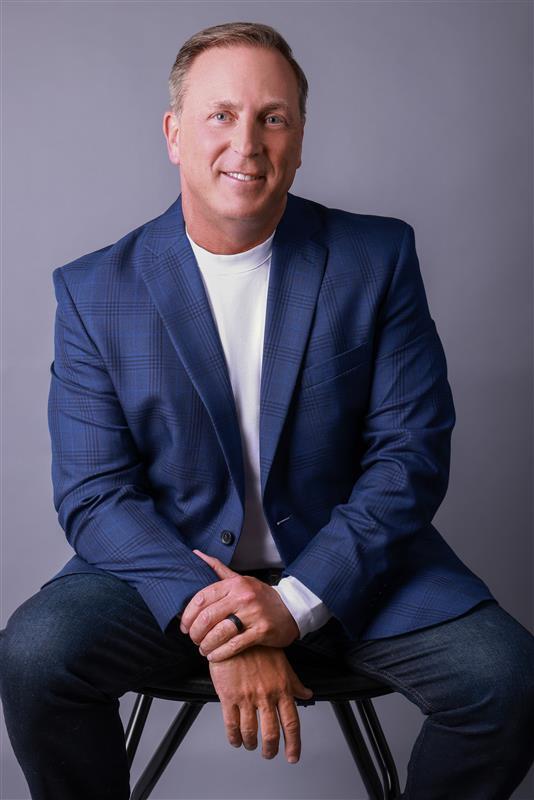
Ken is CEO of Bchex, where he leads a platform spanning background checks, continuous monitoring, visitor management and volunteer screening. He created the Screening Hero Masterclass, a free SHRM-certified course on building FCRA-compliant screening programs. After a career spent in screening, what still gets his attention is what good hiring builds: safer workplaces and stronger teams.
Recent Episodes
Federal Agents Arrested the New CFO on His First Day
He came in early. He got his badge photo taken. He sat down with the quarterly numbers like he'd been there for years.
Watch Now →
She Showed Up to Work in the Wrong City
She walked into the office on her first day. The receptionist had no idea who she was. It took 18 minutes for anyone to figure out what was wrong:
Watch Now →
Fired on Day One for Going Home on Time
She worked nine and a half hours on her first day. She got paid $28 for it. Then, at 7:30 that night, her phone rang.
Watch Now →